From Visual Harmony to Psychological Balance
Choosing a color palette for your home is one of the most impactful decisions affecting daily
experience within the space, yet it’s often handled randomly. Residential design studies
indicate color harmony extends beyond visual beauty to long-term feelings of comfort or
tension.
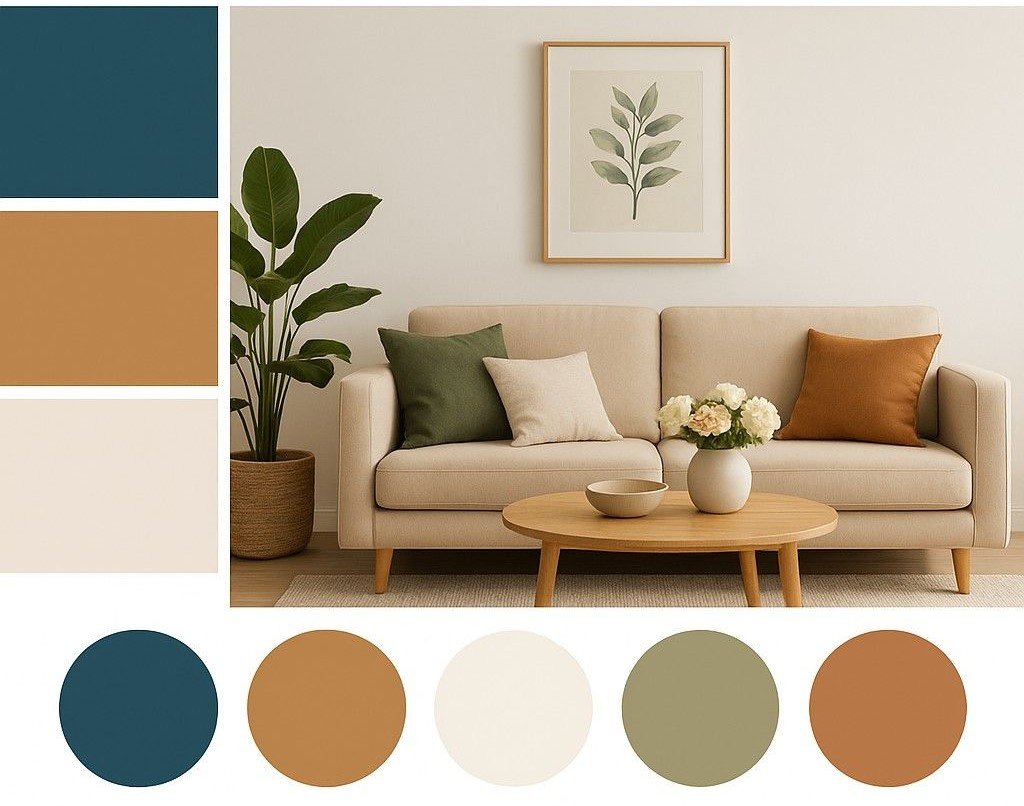
The color palette is an integrated system, not just a collection of beautiful colors. The
human brain constantly seeks patterns, and when it finds logical relationships between
colors in a space, it feels stability. When colors feel disconnected, it creates “perceptual
noise”—a subtle discomfort we may not notice directly.
One fundamental concept in palette selection is the “dominant color.” Studies show having
a primary color occupying the largest area helps the brain organize the visual scene.
Secondary colors support this color, not compete with it. Bold colors work best as limited
accents to maintain impact without confusion.
Lighting plays a pivotal role in color perception. Research indicates color isn’t perceived
statically—it changes based on light type, intensity, and direction. A color appearing warm
in daylight may look completely different under artificial lighting. Therefore, palette selection
must consider both natural and artificial lighting.
The color palette also can’t be separated from room function. Spaces requiring focus or
calm benefit from low-contrast palettes, while social areas can handle greater variety. This
functional color distribution is based on human behavior studies within residential
environments.
Even culture and personal experience influence palette choice. Some colors carry positive
connotations in one culture and negative in another. Thus, successful palettes consider
cultural and personal context, not just general rules.
Choosing the right color palette isn’t complex, but requires awareness of how color interacts
with light, space, and the human psyche. When done intelligently, your home becomes a
harmonious space that makes you feel comfortable without precisely knowing why.