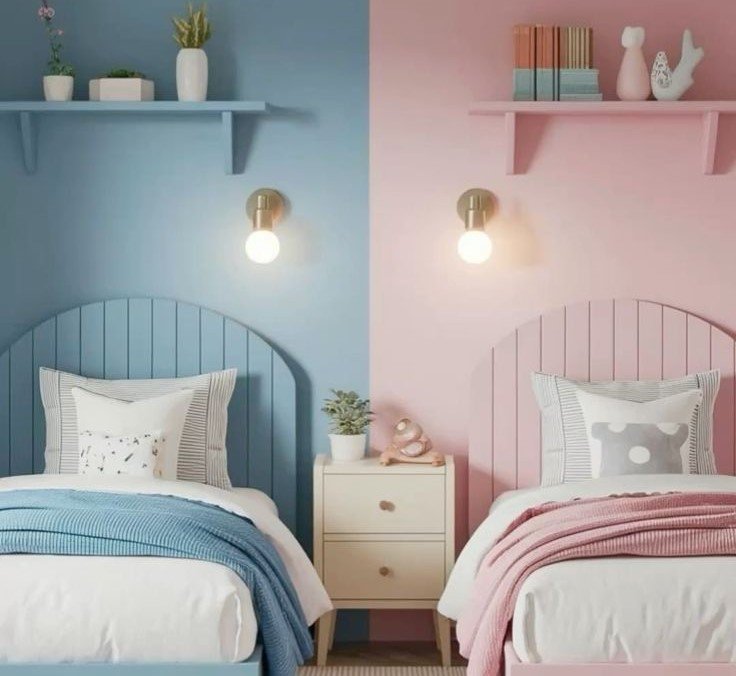
How Color Affects Child Behavior and Development
Choosing colors for a child’s room is often driven by emotion or taste, but
developmental psychology research indicates color directly impacts child behavior,
focus, and emotional response to their environment.
Children process the world more visually than adults, with brains still building neural
connections. Therefore, color intensity, contrast, and placement within the room play
bigger roles than we imagine. Studies show excess bright colors may lead to
distraction or hyperactivity, especially in preschool-aged children.
Calm colors like light blue, soft green, or pastel shades help soothe the nervous
system and enhance security feelings. These colors suit sleep or reading areas
where children need focus and calm.
However, this doesn’t mean depriving children of vibrant colors. Research confirms
bright colors have positive role when used in specific areas like play corners or
creative activities. Color acts as stimulant here, but must be limited and directed.
Zoning the room by color is a modern approach in children’s room design. This
division helps children unconsciously understand space functions, learning there’s
time for activity and time for rest. This principle derives from behavioral learning
theories linking environment to behavior.
Children’s color preferences also change with age. Studies indicate younger children
are drawn to clear, simple colors, while taste complexity develops with growth.
Therefore, flexible base colors developable with simple touches are recommended
over radical changes.
A child’s room isn’t just beautiful space—it’s educational and psychological
environment. Choosing appropriate colors helps the child feel stable, express
themselves, and grow in supportive space rather than confusing one.