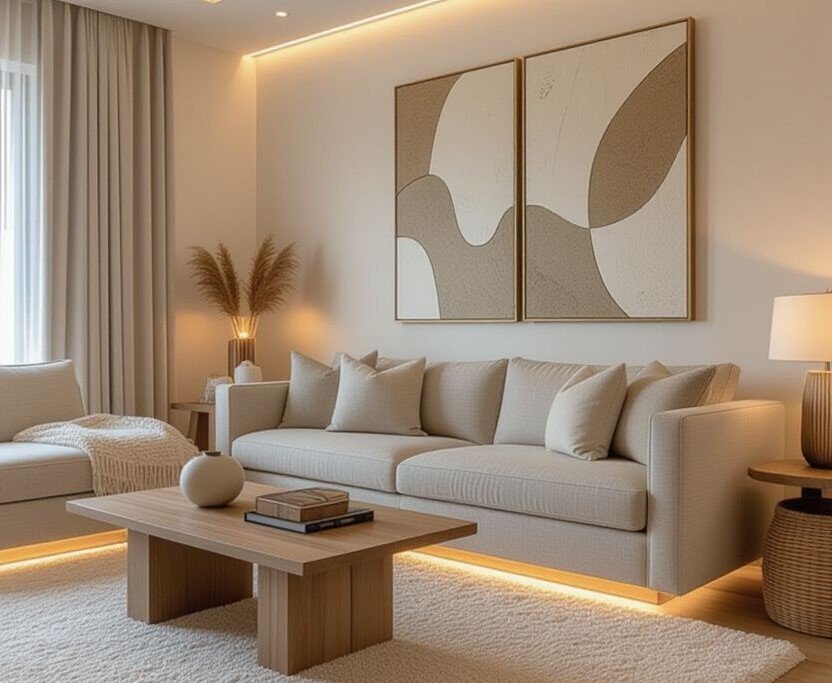
The Philosophy of Smart Beauty Over Excessive Spending
The idea that elegance requires a huge budget is one of the most common myths
debunked by modern design studies. In reality, consumer behavior research shows
most dissatisfaction with homes stems not from lack of money, but from poor
decision-making. Smart design starts with understanding, not buying.
Modern interior design relies on the principle of spatial perceptual value—what
means humans don’t judge a space’s beauty by its elements’ cost, but by their visual
harmony, psychological comfort, and ability to serve lifestyle. That’s why a simple
home can look more elegant than one with lavish spending but no clear vision.
The first real step for elegant home design on a limited budget is reassessing current
space before adding anything new. Architectural studies indicate removing visual
clutter significantly boosts beauty perception at zero cost. Thoughtful emptiness is a
design element itself, not wasted space as some believe.
Multi-functional furniture forms the cornerstone of smart economical design. Small-
space design research proves pieces serving multiple roles reduce need for extra
items while enhancing spaciousness feeling. One carefully chosen piece can replace
three thoughtless ones.
Lighting ranks among the lowest-cost elements transforming home appearance.
Environmental psychology studies confirm light distribution directly affects space
size and warmth perception. Side lighting, hidden lighting, or even color temperature
changes can give luxury feel without major alterations.
Colors play a pivotal role. Color psychology research shows warm neutral tones
create harmony and stability, while bold colors in small doses add personality and
elegance. Balance is the secret—not color abundance or absence.
A key principle in modern European economical design schools is repurposing. An
old piece can become focal if repositioned, relit, or blended with modern elements.
Behavioral studies indicate this mix creates distinction since the home doesn’t look
copied or generic.
Textures and materials often get overlooked despite major impact. Natural fabrics,
woods, and simple metals elevate visual value more than expensive shiny pieces.
Research confirms humans psychologically respond to nature-like materials, giving
unconscious comfort.
Even walls can transform into design elements without big spending. Changing
photo display, using sized mirrors thoughtfully, or adding simple shelves redefines
walls as living spaces. Visual perception studies show active visual walls make
spaces richer and more balanced.
Plants are another element research proves vital for improving home life quality.
They add beauty and affect mood while reducing stress. Most importantly, plants
rank among lowest-cost, highest-impact design elements, especially when smartly
distributed.
Regarding technology, modern design doesn’t separate elegance from intelligence.
Small smart devices—especially lighting or organization ones—add modernity feel
without huge investments. Studies show users link “smart homes” with “comfortable
homes,” even with simple changes.
Ultimately, designing an elegant home on a simple budget doesn’t rely on copying
viral images, but understanding real needs and daily living. True elegance whispers,
not shouts. When built on awareness, every home element gains meaning, not just
cost.