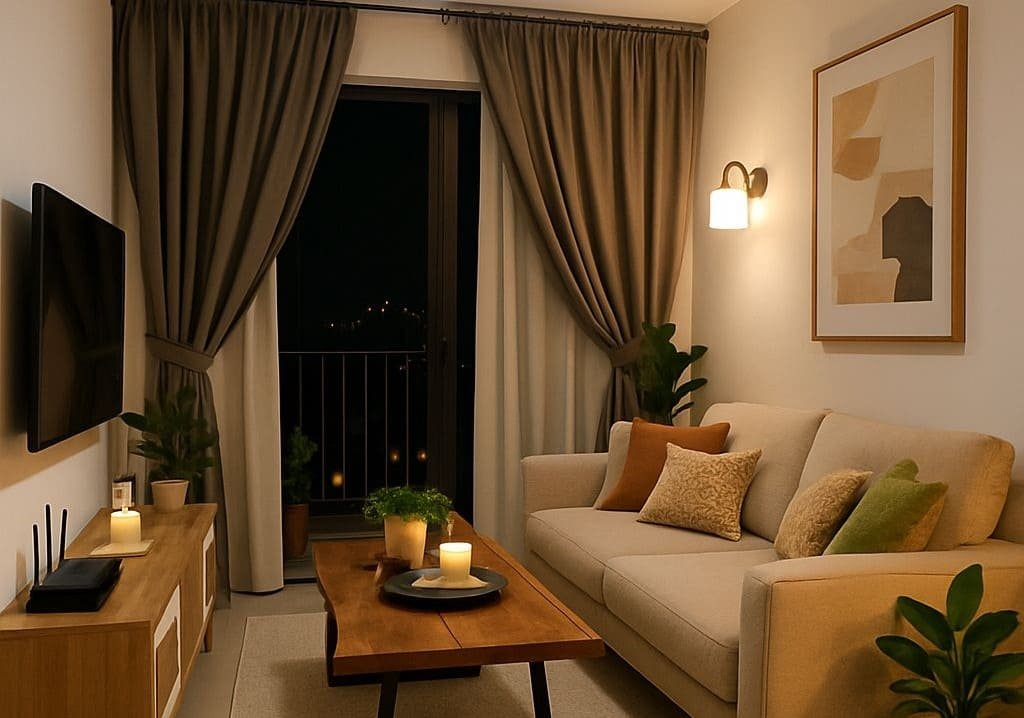
How to Create a Psychologically Balanced Home Before Making
It Visually Beautiful?
The perfect home isn’t the most luxurious or expensive—it’s the one most capable of
psychologically supporting humans in daily life. Environmental psychology research
confirms residences aren’t just physical living frames, but psychological systems affecting
mood, behavior, and family relationships.
First golden rule: balance between function and beauty. Many homes look beautiful in
photos but prove exhausting in use. Behavioral studies indicate spaces hindering
movement or not serving daily routines create unconscious stress, even if visually
attractive.
Second rule: visual clarity. Human minds prefer spaces they can “read” easily. When
functions stay unclear or elements overlap illogically, brains expend extra effort
understanding the space, leading to mental fatigue. Thus, clear design—even
simple—creates comfort feeling.
Gradation proves essential in any perfect home. Gradation in lighting, colors, and even
room transitions. Studies show abrupt changes create cognitive shock, while gradation
allows minds smooth transition between psychological states.
Fourth rule concerns natural light. Natural light isn’t just aesthetic element, but biological
regulator. Sleep and circadian rhythm research confirms natural light exposure improves
mood, focus, and sleep quality. Perfect homes utilize natural light without excess or
deprivation.
Interior environment control forms another golden rule. Ability to control lighting,
temperature, and even furniture distribution gives humans control feeling—essential
psychological element for safety sensation. Studies show homes offering this control
achieve higher housing satisfaction.
Sixth rule: respecting privacy without isolation. Perfect homes balance shared and private
spaces. Housing sociology explains this balance reduces family friction while enhancing
belonging feeling simultaneously.
Organized storage isn’t secondary detail. Visual clutter scientifically links to elevated stress
levels. Neuroscience research confirms brains treat clutter as constant stimulus, even
unnoticed. Thus, organization forms essential perfect home part.
Eighth rule: flexibility. Life changes, so do our needs. Ideal design proves adaptable.
Flexible furniture and multi-use spaces make homes grow with residents.
Colors must get chosen based on feeling, not fashion. Color psychology shows colors affect
mood and behavior. Perfect homes use colors as psychological support tool, not
showpiece.
Finally, most important rule: perfect home reflects you, not others’ expectations. Studies
confirm home satisfaction ties to belonging feeling, not external admiration. When your
home resembles you, it becomes space for true comfort.