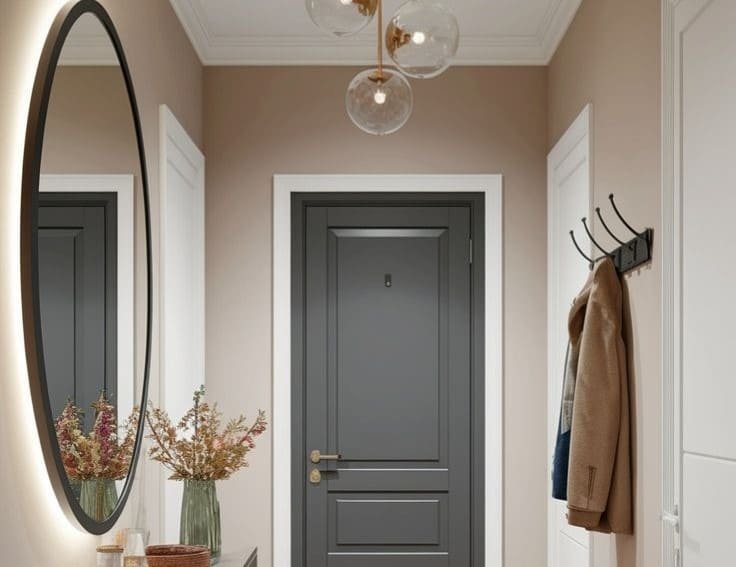
Why the Entrance Impacts Your Psychological Impression of
the Entire House Most?
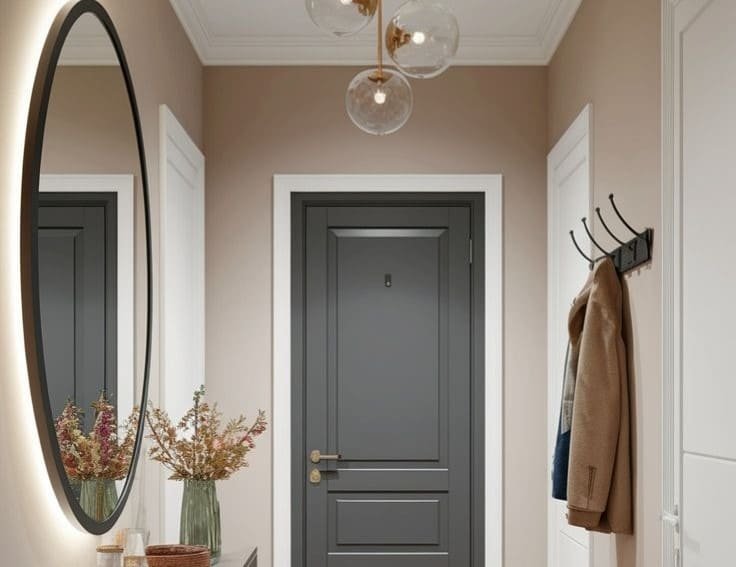
The home entrance isn’t just passage space—it’s the first message space sends to the
mind. Environmental psychology studies confirm first impressions of any space form within
few seconds, affecting our evaluation of remaining areas even irrationally. Thus, home
entrances play larger psychological role than their actual size.
The human mind treats entrance as transitional zone between outside world and private
environment. If unprepared psychologically, people feel discomfort even before fully
entering. This explains why many beautiful-inside homes feel incomplete due to neglected
entrances.
Entrance luxury doesn’t mean cost, but clarity and organization. Behavioral research
indicates organized spaces get mentally interpreted as “elegant,” even if simple. Clutter, no
matter how valuable the furniture, reduces quality perception.
Lighting forms first element creating this sensation. Entrance lighting must prove
comfortable and clear without harshness. Studies confirm medium warm light creates
welcoming feeling, directly reflecting on entry mood.
Mirrors serve smart psychological role in entrances, especially narrow ones. Visual
perception science explains mirrors expand space visually and enhance depth feeling. But
research warns against random placement, as sudden reflections may cause visual
confusion.
Entrance wall isn’t mere backdrop. Using studied color or different material gives space
clear identity. Studies show gentle contrast in entrances helps brains smoothly transition
from outside to inside.
Small furniture pieces like console tables or benches prove not just functional, but
psychological. Fixed element in entrance gives stability feeling. Housing design research
shows humans feel comfort finding reference point upon entry.
Plants play essential role in entrances. Living element at entry reduces outside stress.
Biophilic design studies confirm plants in transition areas improve mood and enhance
welcoming sensation.
Even floors affect luxury feeling. Clear transition between entrance flooring and rest of
home psychologically defines this zone. Research indicates this visual separation helps
minds “close” outside world.
True entrance luxury comes from conscious simplicity. Clean space, thoughtful lighting, and
personal touch suffice to transform entrance into experience, not mere passageway.
Ultimately, home entrance isn’t place we pass through, but daily psychological moment we
live. When designed consciously, it becomes comfortable start to every day and reassuring
end to every return.