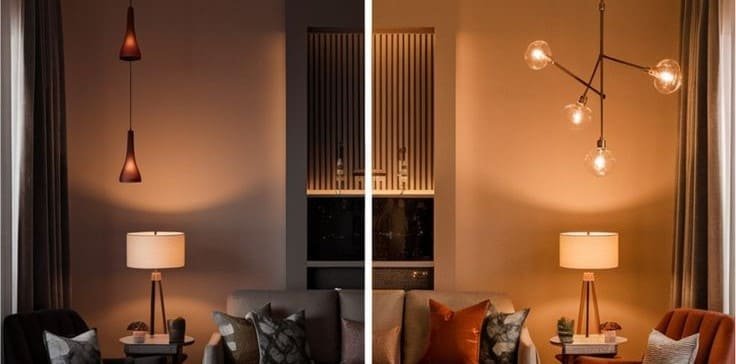
How does light color change our sense of space and its
function?
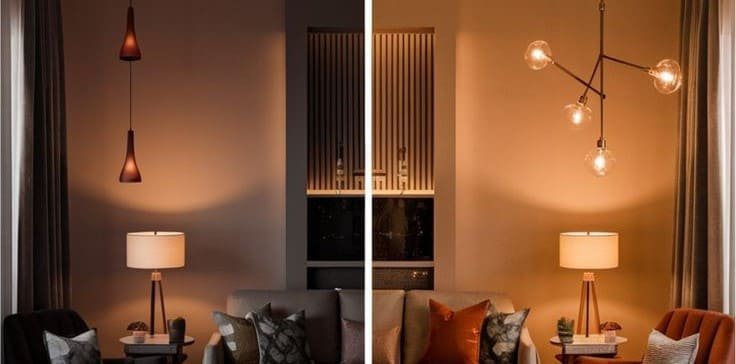
Light color ranks among the most misunderstood factors in interior design, despite its
profound impact on perception and mood. Neuroscience studies confirm the brain responds
to light not just by intensity, but by color too—each hue sends distinct signals to the nervous
system.
Yellow, or warm, lighting ties historically to firelight and sunsets. That’s why the brain
interprets it as a signal for safety and relaxation. Research shows this light reduces neural
activity and stimulates comfort hormones, making it ideal for evenings, bedrooms, and living
rooms.
Cold white lighting mimics peak midday sunlight. This light boosts alertness and focus.
Neuroscientific studies reveal exposure increases mental activity and reduces drowsiness,
suiting precise tasks like cooking or office work.
Neutral lighting serves as a middle ground between the two. It imitates natural daylight
without excessive stimulation or over-relaxation. Research indicates neutral light offers the
most versatility, supporting balanced use without imposing strong psychological states.
These types differ not just in feel, but in color perception. The same hue can appear entirely
different under each light. Visual perception science confirms light reveals color—so wrong
lighting choice distorts decor appearance.
Yellow light highlights natural textures like wood and fabrics, while white emphasizes purity
and lines. That’s why the former suits living spaces and the latter functional areas. Studies
affirm this specialization improves both performance and comfort.
A common mistake is using one lighting type throughout the home. Behavioral research
shows this disrupts the body’s daily rhythm, affecting sleep and mood. Thoughtful variety is
the optimal solution.
Even light intensity interacts with color. Strong yellow light can feel intrusive, while dim
white light proves impractical. Balancing intensity and hue creates the right experience.
Control over light temperature gives users a sense of mastery—a key psychological
element for comfort. Studies show homes offering this control yield higher long-term
satisfaction.
In the end, white, yellow, and neutral lighting aren’t mere technical options—they’re
psychological tools. When used mindfully, light becomes part of daily human comfort, not
just a means of seeing.