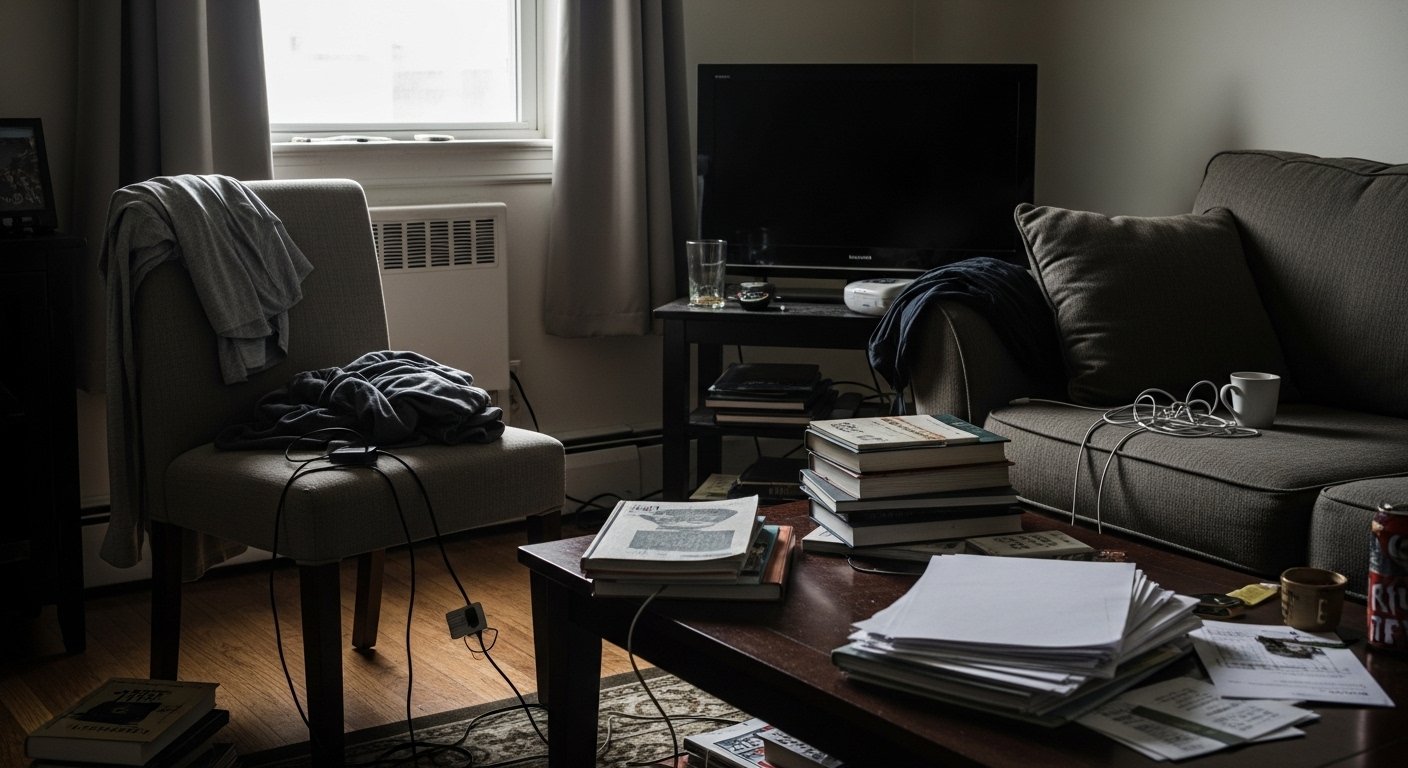
The Link Between Clutter and Mental Fatigue
People often feel exhausted without an obvious cause, despite minimal
physical effort. Modern neuroscience highlights one hidden factor: the
surrounding environment, specifically home clutter. A cluttered visual
environment correlates with increased mental stress.
First: How Does the Brain Process Surrounding Spaces?
The human brain is wired to seek patterns and order.
A study from Neuroscience Journal indicates that clutter forces the brain
to:
•Continuously filter unnecessary information
•Remain in a heightened state of alertness
•Consume extra mental energy
This leads to fatigue even during rest.
Second: Clutter as a Chronic Stress Factor
UCLA research on home environments shows that cluttered homes are
linked to:
•Elevated cortisol levels
•Difficulty relaxing
•Reduced sense of control
Here, clutter isn’t a passing event—it’s a constant stress source.
Third: The Difference Between Physical and Mental Clutter
Physical clutter:
•Too many items
•Filled surfaces
•Unclear storage
Mental clutter:
•Distraction
•Tension
•Difficulty making simple decisions
The relationship is cyclical: physical clutter increases mental fatigue, and
mental fatigue makes organization harder.
Fourth: Why Do We Get Used to Clutter and Ignore Its Effects?
The brain has adaptation capabilities, so it stops noticing clutter—but it
doesn’t stop processing it.
This is the danger: the stress persists unconsciously.
Fifth: Organization as a Therapeutic Tool
In environmental behavioral therapy programs, space organization is
used as part of:
•Anxiety treatment
•Focus improvement
•Mental health support
Organization here isn’t superficial—it’s a way to reduce neural load.
Clutter isn’t just an unpleasant sight; it’s a real burden on the brain.
When your home becomes a supportive environment instead of a stress
trigger, it directly boosts mental energy and quality of life.