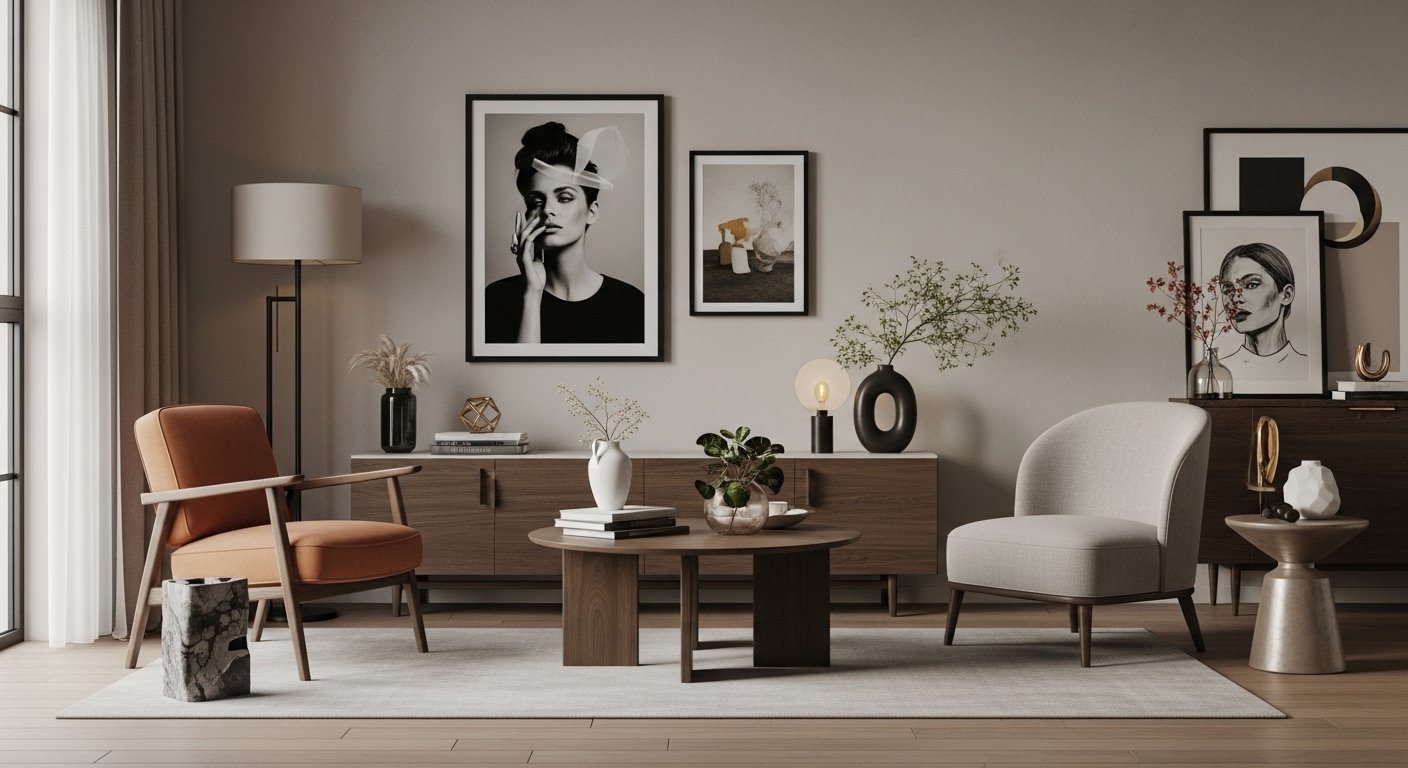
A Psychological Explanation of Our Relationship with Beauty at Home
We instinctively gravitate toward beautiful items, even without
considering their place or function. This behavior is common but not
random. Aesthetic psychology interprets this attraction as an innate
response to beauty that sometimes overrides logic.
First: The Brain and Beauty
Neuroscience studies show that seeing beautiful things:
•Activates reward centers in the brain
•Boosts dopamine levels
•Delivers instant pleasure
This draws us to the piece before thinking about its use.
Second: Beauty as Personal Identity
Beautiful pieces give us a sense of:
•Expressing who we are
•Reflecting our taste
•Adding symbolic value to the space
Even if they lack a clear spot.
Third: The Illusion of Completion
Psychologists describe the Illusion of Completion, where we believe
owning something beautiful will make the space or life feel more
complete—though reality may not change.
Fourth: The Influence of Stores and Visual Display
How items are presented in stores:
•Studied lighting
•Attractive arrangements
•Ideal contexts
Makes us forget our home’s true context.
Fifth: When Does Attraction Become a Problem?
When:
•Pieces accumulate unused
•Function is lost
•Space turns to clutter
Here, beauty loses its value.
Attraction to beauty is a natural human trait, but contextual awareness
turns it from impulse to conscious choice. The most beautiful piece isn’t
always the flashiest—it’s the one most harmonious with your life and
space.