Lighting isn’t just a decorative element—it’s one of the strongest factors
influencing psychological comfort, focus, sleep quality, and overall mood
in the home. Many homes look beautiful with furniture and colors, yet
leave a subtle sense of fatigue or tension. Most often, the cause is
unthoughtful lighting.
Environmental psychology studies show the human brain responds to
light as a core biological signal, not mere visibility. Thus, the difference
between a well-lit home and a visually draining one isn’t just
brightness—it’s distribution, color, and timing.
Why Does Lighting Affect Us More Than We Think?
Per Journal of Environmental Psychology studies, lighting directly
impacts:
•Focus levels
•Calmness or tension feelings
•Spaciousness or tightness sense
•Sleep quality and circadian rhythm
Harsh or unbalanced light keeps the nervous system in constant alert,
even when sitting still. That’s why you may feel drained at home without
clear reason, while more modest places feel comfortable.
Mistake #1: Relying on a Single Lighting Source
A common home error is sole reliance on strong ceiling lighting.
This type:
•Creates harsh shadows
•Strains eyes
•Makes space feel flat and tense
Modern design views lighting in layers:
1.General lighting
2.Task lighting
3.Ambient lighting
Missing any layer causes clear visual imbalance, even if unnamed.
Mistake #2: Choosing Wrong Light Color for Space Nature
Cool white light suits offices or functional areas, but in living rooms or
bedrooms creates stiffness.
Chronobiology research shows cool white suppresses melatonin—the
relaxation hormone.
Warm light, conversely:
•Eases stress
•Creates containment
•Makes space more human
Visually draining homes often suffer not from low light, but wrong color
temperature.
Mistake #3: Lighting Not Serving Daily Use
Good lighting prioritizes function over form.
Kitchens need clear surface light; living rooms need flexible light
changing by time/activity.
Missing task lighting forces eyes to extra effort for focus, causing long-
term fatigue.
Here emerge smart lighting solutions directing light where needed, not
randomly illuminating everything.
When Does Lighting Become Truly Smart?
Smart lighting doesn’t mean complex tech.
It means:
•Intensity control
•Suitable color temperature choice
•Multi-point distribution
•Adaptation to time and use
Contemporary design studies show controllable multi-source homes give
occupants greater control and comfort.
How to Create a Visually Comfortable Home Without Major Changes?
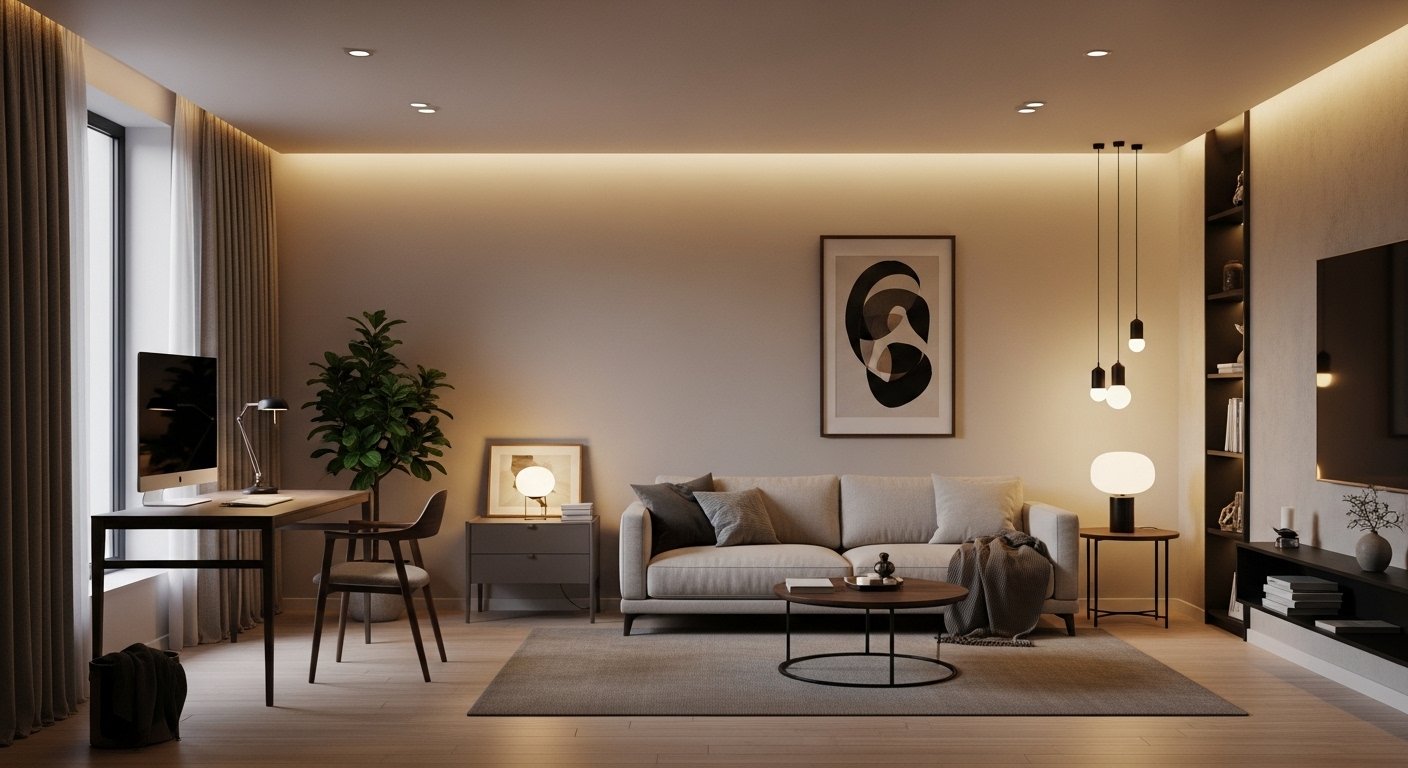
Solutions need no rewiring or overhauls—just smart choices like:
•Side units breaking overhead harshness
•Hidden lighting adding depth without strain
•Directed lamps for reading/work
•Controllable lighting by need
These change not just home look, but living experience.
Lighting and Purchasing Decisions: An Indirect Link
Behavioral studies show comfortable lighting reduces mental stress,
improving daily decision quality.
In visually draining homes:
•Decisions are quicker
•Patience lower
•Mood sharper
In balanced lighting homes:
•Control sense higher
•Time flows smoothly
•Space “works with you,” not against
Why Is Lighting an Investment, Not Luxury?
Many delay lighting upgrades as secondary, but designers confirm it’s
added last… and noticed first.
Choosing smart, varied lighting isn’t filling with lamps—it’s selecting
what:
•Serves usage
•Respects eyes
•Gives daily flexibility
We offer plenty of lighting options in our store—choose what suits your
home