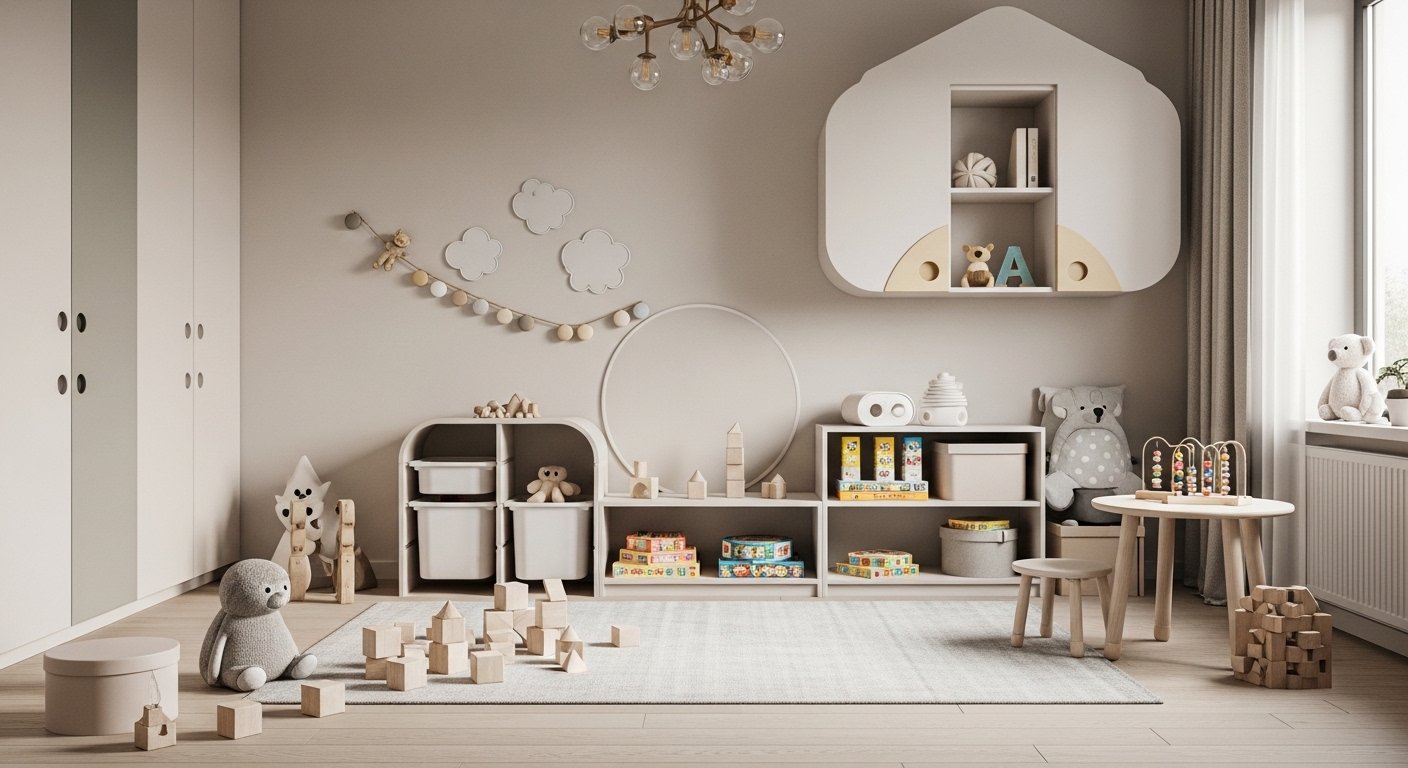
And Why Toy Selection Matters More Than Quantity?
A child’s room isn’t just for sleeping or playing—it’s an environment
shaping consciousness, behavior, and learning from early years. Yet
many parents fall into a common trap: believing more toys and products
mean a better environment. Educational studies confirm overcrowded
spaces may hinder rather than support child growth.
The real question isn’t: How many toys does the child own?
But: Does what’s around them aid development or distract?
What Do Studies Say About Toy Abundance?
A Infant Behavior and Development Journal study showed children with
fewer toys:
•Focus longer
•Use imagination more deeply
•Show better problem-solving skills
Conversely, toy abundance leads to:
•Attention distraction
•Quick switching without real engagement
•Unseen but impactful mental fatigue
This highlights conscious selection over random accumulation.
Safe Space Doesn’t Mean Empty Space
Some think fewer products mean emptying the room—and that’s wrong.
A supportive child space:
•Gives movement freedom
•Protects from hazards
•Offers age-appropriate smart stimuli
Per Montessori and Reggio Emilia theories, the ideal child environment
is:
•Organized
•Clear
•Carefully selected tools
Not filled with garish colors and piled products.
How to Choose Toys That Truly Develop Child Skills?
Beneficial toys aren’t necessarily priciest or most complex.
They’re those:
•Encouraging thinking
•Developing motor skills
•Stimulating interaction over passive consumption
Developmental psychology studies categorize good toys into basics:
1.Motor Skill Development Toys
Like those relying on:
•Building
•Assembly
•Balancing
These develop eye-hand coordination, supporting physical
and neural growth.
2.Thinking and Problem-Solving Toys
Requiring:
•Sorting
•Matching
•Tidying
•Independence
Here shine child-specific smart storage like:
•Low-level units
•Clear-use bins
•Safe products with soft edges
These serve organization and participate in daily upbringing without
commands or pressure.
Safe Space Starts with Smart Choices
American Academy of Pediatrics guidelines note child space safety
involves not just hazard avoidance, but clutter reduction.
Cluttered floors:
•Increase tripping risks
•Hinder natural movement
•Limit free play
Fewer high-value toys create safer, calmer, growth-supportive space.
How to Balance Beauty, Safety, and Benefit?
Ideal child space:
•Isn’t complex
•Nor sparse
•But balanced
Smart child products mean seeking:
•Simple design
•Multi-uses
•Safe materials
•Real educational value
This turns buying from consumption to conscious choice serving child
and family.
Children don’t need more… but the best. To choose the best for their
childhood, browse our store
https://handesly.com/collections/all