The Table Is an Experience, Not a Biological Activity
Imagine a table that breathes, chairs that speak, and every dish telling a story.
In 2026 eating is no longer just a biological activity completed in front of the
TV or phone screen. It has become a complete human experience combining
the senses, emotions, and family communication in a single moment. The
secret lies not only in what we place on the table but in the design of the
space itself and in how the entire eating experience is organized: the colors,
lighting, furniture arrangement, and serving tools.
The Evolution of Dining Rooms: From Formality to Vitality
Dining rooms in the past were very formal and rigid: enormous tables,
matching chairs like soldiers, limited wall decor. They were primarily for
guests, not family. But 2026 says something fundamentally different: the
dining room has become a stage for daily experience, a place for genuine
family connection, laughter and sharing — not just social protocol.
Color Psychology and the Dining Experience
Modern studies indicate that the colors surrounding us during meals directly
affect the eating experience itself. Warm colors like orange and yellow
stimulate appetite and encourage eating with greater enjoyment. Calm colors
like light blue and soft green reduce tension, create a feeling of comfort during
meals, and make conversations calmer. In 2026 colors will be an intentional
design tool for shaping the dining experience.
Table, Chairs, and Lighting
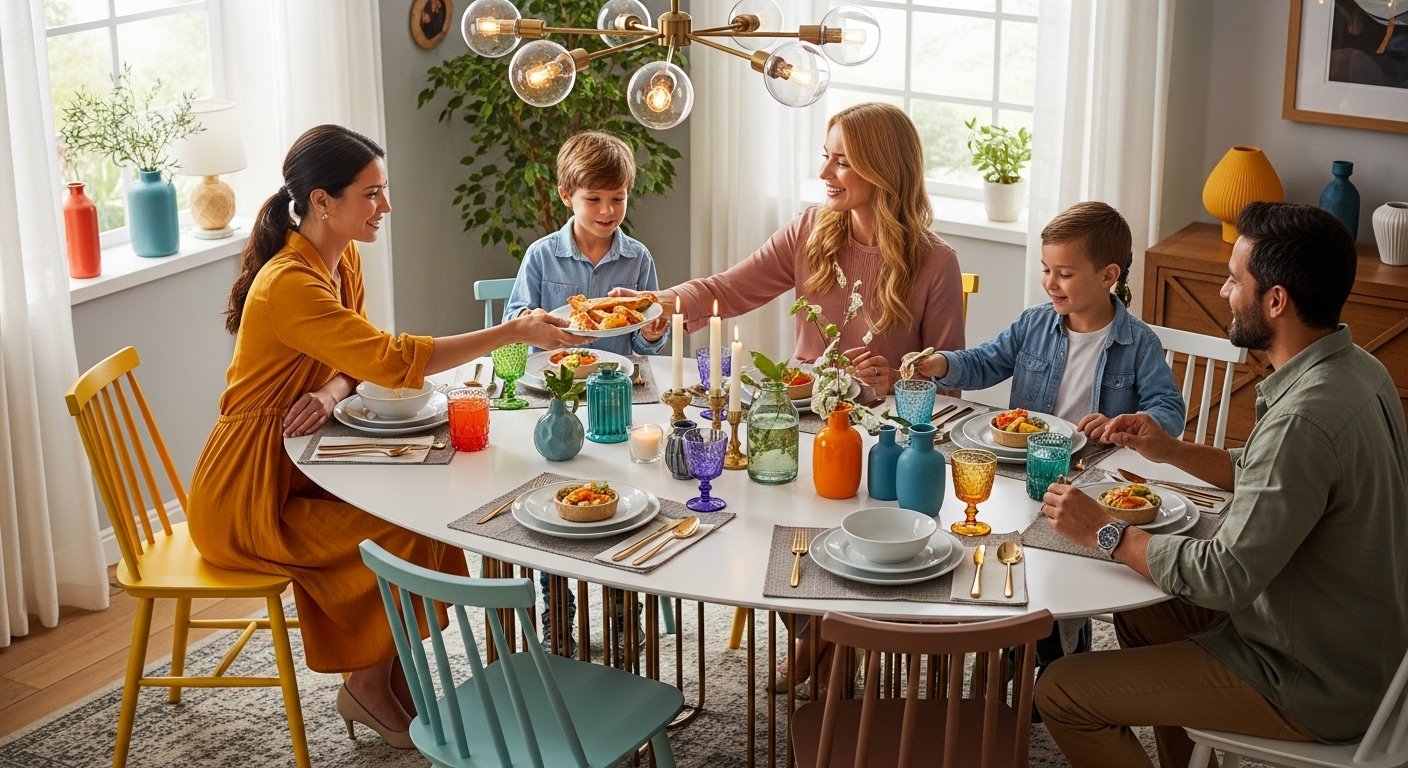
Round and oval tables have become a primary choice because they make
everyone feel at the center of the conversation without a ‘head of the table’
granting one person higher status. Chairs no longer need to be identical:
deliberately mixing different shapes, colors, and materials adds a playful touch.
The lighting above the table is one of the most powerful factors in shaping the
dining experience: a beautiful hanging chandelier makes every meal feel like a
special occasion. Warm lighting makes food colors appear more appetizing.
Practical Tips for Transforming Every Meal into an Experience
Use colorful or innovatively shaped serving dishes even for daily lunch.
Maximize natural light and add warm lighting for the evening. Mix materials on
the table: natural wood with gold metal or transparent glass. Don’t be afraid to
mix old with new utensils. Studies indicate that a beautiful dining experience
strengthens family bonds and encourages children to appreciate meals and
reduce food waste.
The question is no longer: what will you eat? It has become: how will you
experience every meal? Every day is an opportunity to celebrate family,
beauty, and small moments. And for more creative ideas on organizing your
space with beauty and intelligence, don’t miss: ‘Do You Have a Shelf
Obsession?’