
Why Thoughtful Simplicity Forms the Foundation of
Psychological Comfort?
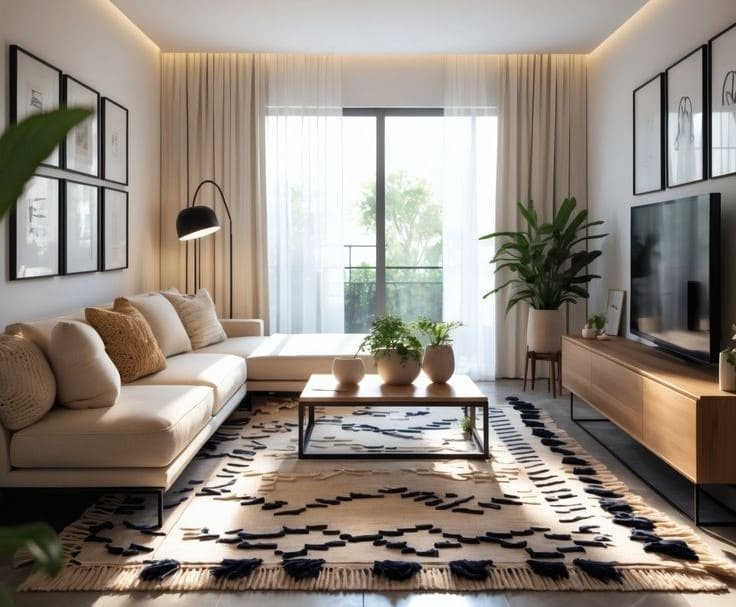
Home comfort goes far deeper than just a cozy sofa or spacious room. Environmental
psychology studies show comfort feelings tie more to organization levels, visual clarity, and
space control sense than size or cost.
Humans naturally respond to environments they inhabit for long hours. Neuroscience
research confirms visual clutter unnecessarily raises brain activity, causing stress even
during rest. Thus, comfortable homes tend to be simple, clearly defined, and free from
unjustified crowding.
Simplicity here doesn’t mean emptiness, but conscious choice. Contemporary design
philosophy studies indicate reducing elements increases each one’s value. When every
piece has purpose and place, humans feel internal harmony reflecting in daily mood.
Lighting proves crucial again. Natural light especially impacts the biological clock directly.
Medical research shows adequate natural light exposure indoors improves sleep, mood,
and focus. Comfortable homes typically welcome light rather than block it.
Calm colors play key psychological roles. Beige, warm gray, and earthy tones soothe the
nervous system. Color psychology explains these reduce stress responses compared to
vibrant shades.
Comfortable furniture doesn’t mean bulky. Functional design studies confirm furniture
matching space size and user movement feels more comfortable than large pieces
restricting flow. Easy navigation space creates liberation feelings.
Sound often gets overlooked too. Noise-absorbing materials like rugs or fabrics reduce
auditory stress. Research shows constant low-level noise negatively affects home comfort
quality.
Comfortable homes support daily routines rather than resist them. Clear storage, easy tool
access, and usage-based space organization all boost comfort feelings. Behavioral studies
confirm homes adapting to owners—not vice versa—improve life quality.
Smart technology, used moderately, enhances this too. Easy control over lighting,
temperature, or daily task scheduling reduces mental load. Research indicates simple
automation frees the mind from repetitive small decisions.
Ultimately, comfortable homes don’t need many elements—they need deep understanding
of residents’ needs. Comfort results not from accumulation, but balance. The closer design
aligns with real life, the more the home becomes a place people return to calm down… not
exhaust further.
