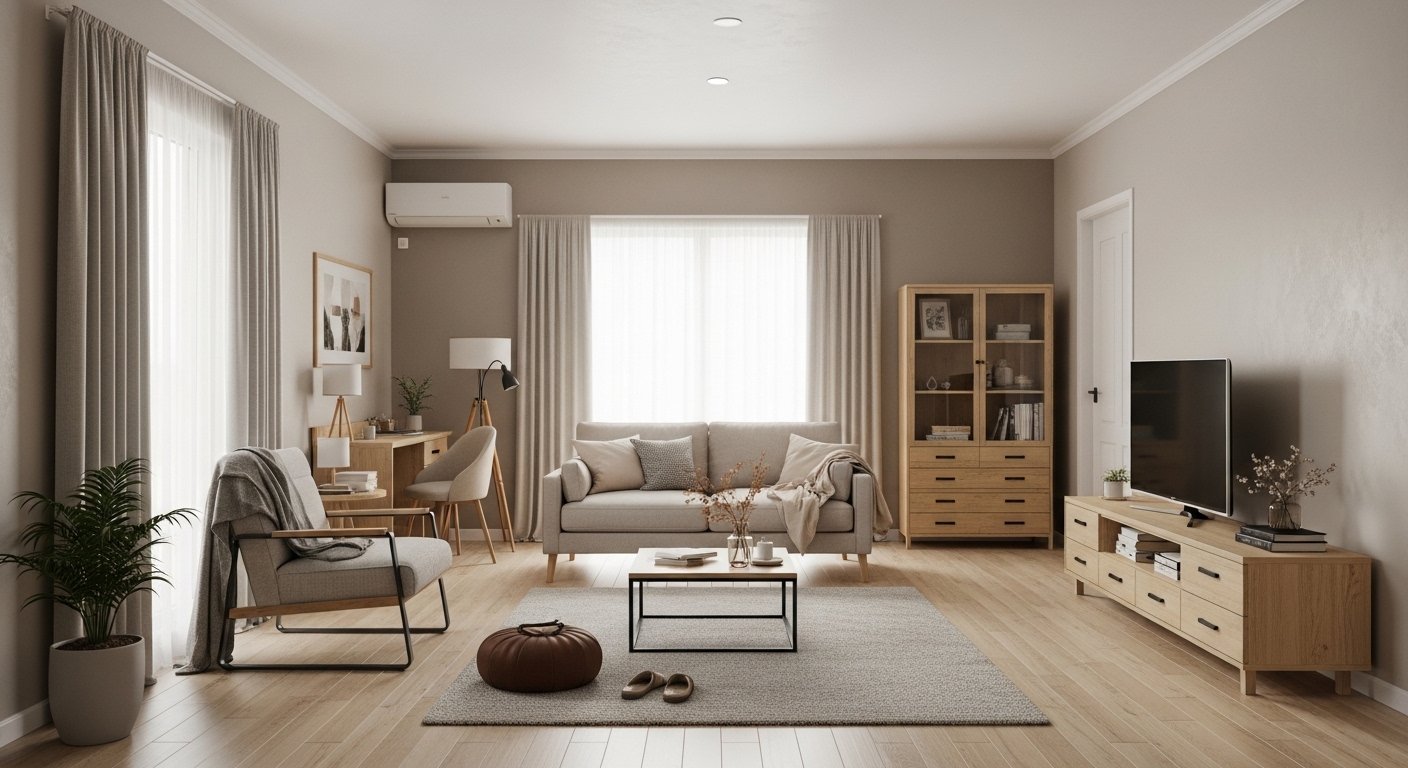
A Deep Dive into the Human-Space Relationship
Your home is where you spend most of your time, yet we rarely ask:
Does this space support me? Or does it drain my energy without me
noticing?
First: The Concept of a “Serving Home” in Design
Modern design introduces User-Centered Space—spaces designed
around actual user needs, not just aesthetics.
A serving home:
•Facilitates movement
•Reduces effort
•Supports daily routines
Second: Signs Your Home Is Draining Your Energy
•Feeling tired upon returning home
•Difficulty finding things
•Constant sense of incompleteness
•Constantly postponing organization
These signs indicate the space is working against you.
Third: Energy Theory and Environment
In environmental psychology, Environmental Fit Theory asserts that the
greater the alignment between a person and their space, the higher their
psychological and physical efficiency.
When your home doesn’t serve your real lifestyle, it becomes an invisible
burden.
Fourth: Why Do We Blame Ourselves Instead of the Space?
Many blame themselves for:
•Laziness
•Lack of commitment
•Clutter
Yet the real issue is that the space isn’t set up to support them.
Your home isn’t just walls and furniture—it’s a daily system that impacts
your energy and decisions. When your home serves you, your energy
frees up for what truly matters.