Psychological and Functional Guide to Light Distribution in
Your Home
Lighting isn’t just means for seeing—it’s psychological and organizational element affecting
home life quality. Modern neuroscience studies confirm light directly impacts biological
clock, mood, focus levels, and energy. Thus, choosing lighting type for each room must
prove deliberate decision, not random choice.
First to understand: every room holds psychological function before physical one. Bedroom,
for example, isn’t just sleeping place, but mental calming space. Research shows dim warm
lighting helps body release relaxation hormones, improving sleep quality.
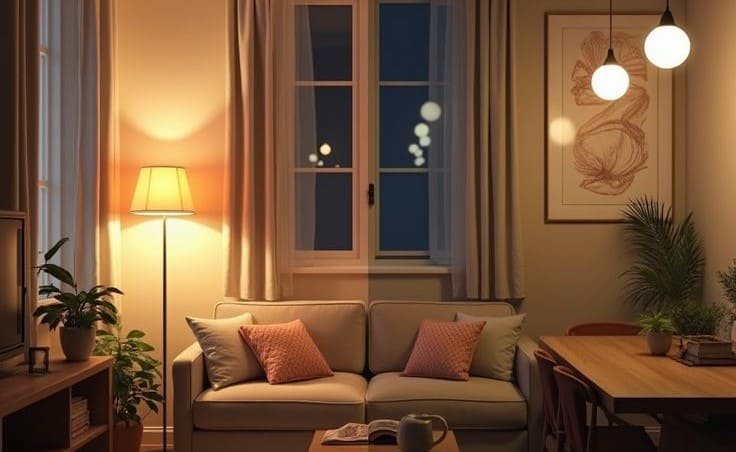
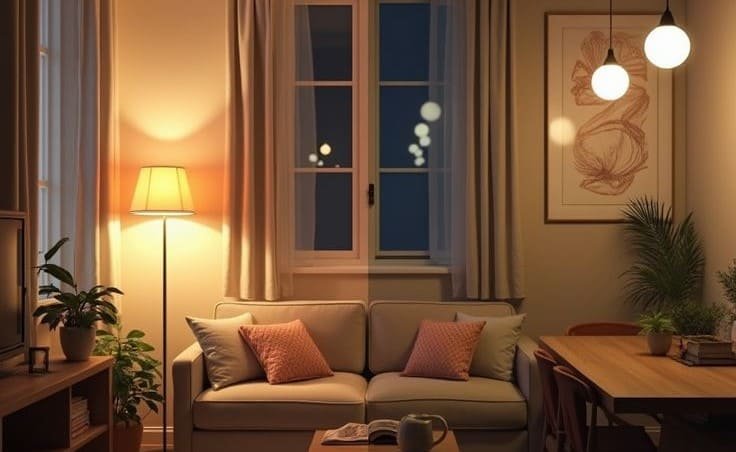
Living room serves transitional space between activity and rest. Studies thus recommend
multi-level lighting. Combining general and side lighting creates psychological flexibility,
letting users adjust atmosphere by time and activity.
Kitchen needs clear functional lighting. Behavioral research confirms insufficient work area
lighting raises stress and increases errors. Thus, kitchen lighting must prove strong,
distributed, and shadow-free.
Work or study rooms require different light type. Neutral white or cool-leaning light
enhances focus and attention. Perception studies indicate this type reduces sleepiness
feeling and boosts mental alertness.
Bathrooms need special balance. Too strong lighting proves disturbing, while weak proves
impractical. Research recommends balanced lighting mimicking natural light, especially
around mirrors, as wrong light causes visual distortion and eye strain.
Hallways and corners often get neglected, but hold key psychological role. Dim lighting here
may create insecurity feeling. Studies show hallway lighting enhances spatial connectivity
sensation throughout home.
Light temperature proves essential factor. Warm light promotes comfort, while cool supports
activity. But excess of either disrupts psychological balance. Research thus emphasizes
smart mixing by room.
Lighting control matters no less than type. Adjustability gives humans control
feeling—essential psychological element for home comfort sensation.
Ultimately, good lighting goes unnoticed, but gets felt. When chosen consciously for each
room, home transforms into harmonious space supporting humans psychologically and
functionally every moment of the day.