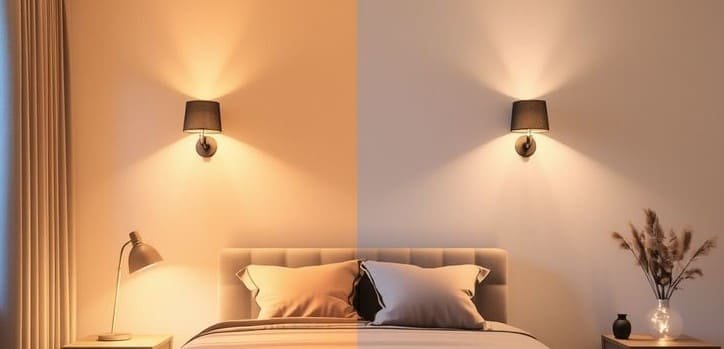
How does light change our sense of a space without altering
anything else?
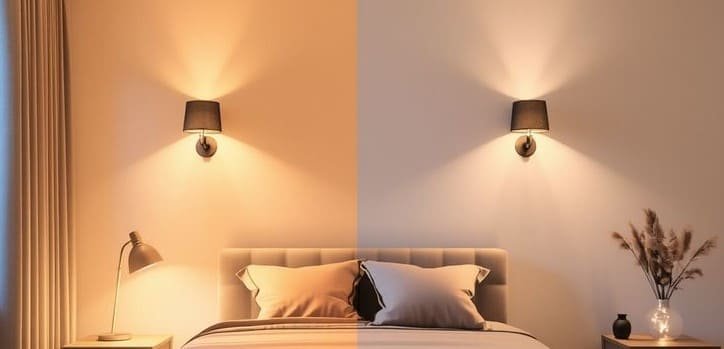
Lighting isn’t just a means of seeing—it’s a psychological language that shapes our
perception of space, mood, and behavior. Recent neuroscience studies confirm that
the type of lighting can alter how the brain processes its surroundings, even if the
decor elements remain unchanged.
Warm lighting has historically been linked to fire and sunset glow. That’s why the
brain interprets it as a signal for safety and relaxation. Research shows this type
reduces activity in the nervous system responsible for stress, fostering a sense of
comfort.
In contrast, cold lighting mimics midday daylight. The brain reads it as a cue for
activity and alertness. Neuroscientific studies reveal that cold light boosts mental
vigilance and reduces drowsiness, making it ideal for work and precise tasks.
The issue arises when using only one type of lighting throughout the home.
Behavioral research indicates this single approach disrupts the body’s daily rhythm,
affecting sleep quality and overall mood.
Decor interacts with light in varied ways. Warm colors under cold lighting may lose
their warmth, while cool colors under warm lighting can appear dull. Visual
perception science confirms that color is only truly perceived through light.
Warm lighting highlights natural textures like wood and fabrics, enhancing feelings of
luxury and comfort. That’s why it’s widely used in living rooms and bedrooms.
Studies suggest this interaction creates a more human-centered environment.
Cold lighting, meanwhile, emphasizes clean lines and visual clarity. It’s common in
kitchens, bathrooms, and workspaces because it minimizes shadows and boosts
precision. Research confirms it improves functional performance.
Balance is key. Combining warm and cold lighting based on the room and time of
day creates psychological harmony. Recent studies recommend adaptive lighting
that shifts throughout the day to mimic natural cycles.
Even light intensity plays a role. Overly bright warm light can feel intrusive, while dim
cold light may be impractical. The interplay between intensity and color defines the
ultimate experience.
Control over lighting gives people a sense of mastery, a core psychological factor for
comfort. Research shows homes with this control yield higher satisfaction among
residents.
In the end, warm and cold lighting aren’t opposing choices—they’re tools. When
each is used in the right place, the home becomes a balanced space that supports
both activity and rest.