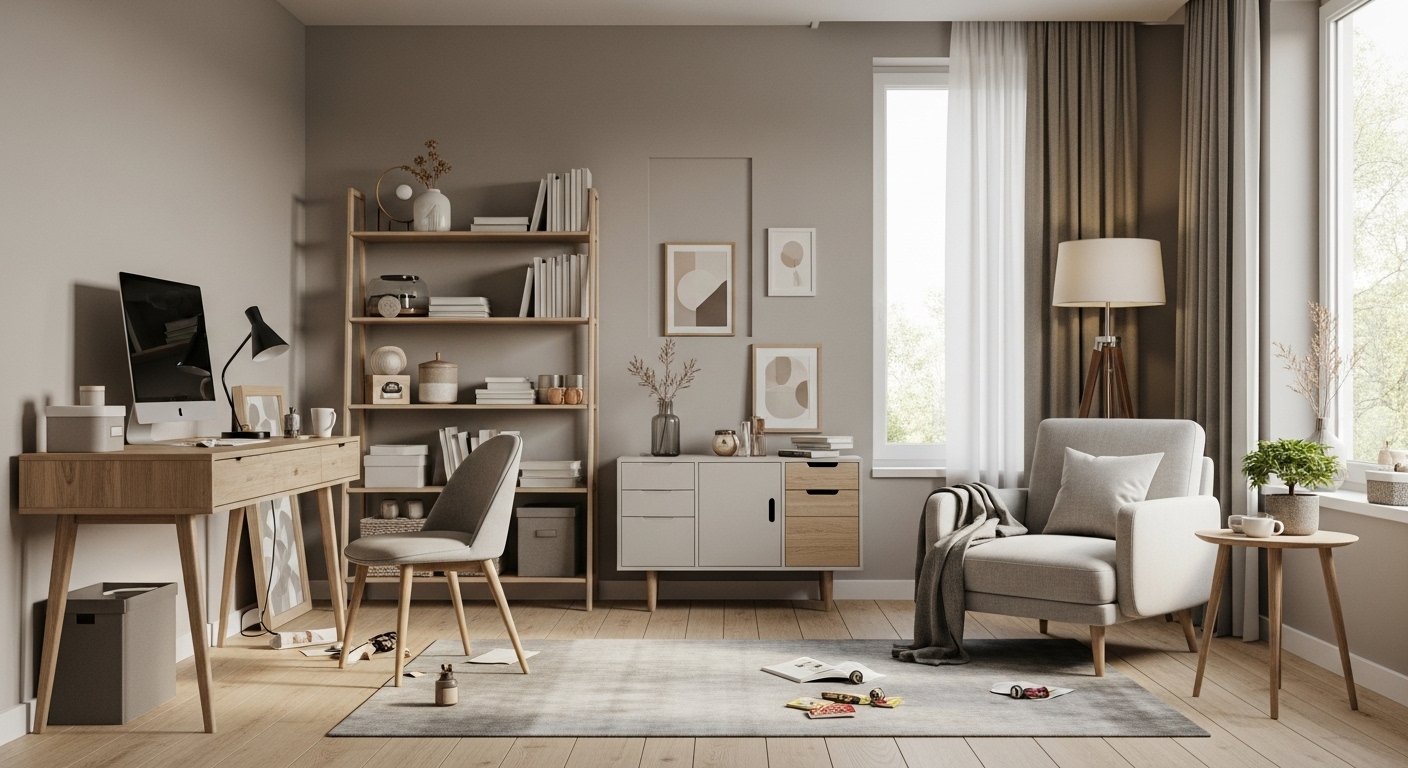
Many assume the fatigue they feel at home stems from tight space or too
many items, but the truth runs much deeper.
There are common organizational errors invisible to the naked eye, yet
they directly impact mental and psychological state, making the home
feel draining even when clean and tidy.
Illusion #1: Tidying Means Organizing
One of the most common mistakes is confusing tidying with organizing.
Tidying means placing things beautifully; organizing means creating a
system for daily use.
A Journal of Environmental Psychology study shows that superficially
tidy environments without functional organization raise mental load, as
the brain processes unrelated information.
Mistake #2: Hoarding “Potential” Items
Keeping things “we might need later” is one of the most space-
exhausting habits. These items:
•Go unused
•Occupy visual space
•Consume mental energy
Per Decision Fatigue Theory, every unused item represents a deferred
decision—and deferred decisions drain the mind unconsciously.
Mistake #3: Lack of Clear Function for Each Space
When one corner serves multiple functions without clear organization,
stress begins.
A Cornell University study proved undefined multi-purpose spaces
increase anxiety compared to clearly purposed ones.
Mistake #4: Random Storage
Storage isn’t a solution if not based on usage logic.
Placing items away from their use locations leads to:
•Repeated searching
•Sense of chaos even when closed
•Loss of control feeling
Mistake #5: Ignoring Visual Fatigue
Even colors, patterns, and detail abundance can become burdensome.
Neuroscience research indicates the brain treats visual distractions as
unfinished tasks, raising stress levels.
How to Avoid These Mistakes?
•Define each space’s function clearly
•Regularly discard unused items
•Organize by usage, not appearance
•Reduce visible items
A comfortable home doesn’t mean emptiness—it means balance.