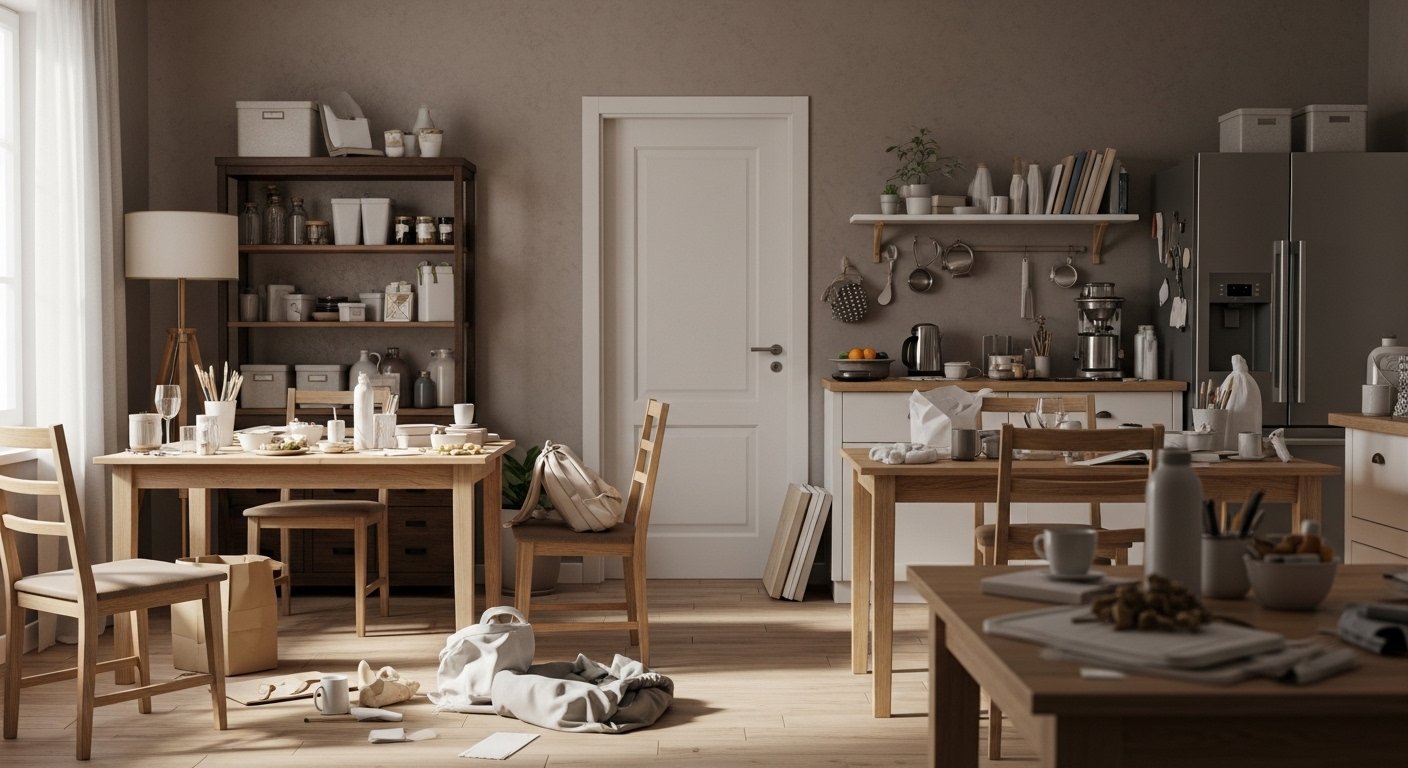
A Psychological Analysis of Purchasing Behavior in Personal Space
We often buy to improve our homes, only to later realize some purchases
weren’t necessary. This mix-up between need and want isn’t
random—it’s a psychological interaction with space, ads, and emotions.
Understanding it helps build a more conscious, less cluttered home.
First: What’s the Difference Between Need and Want?
Need: Something serving a clear, ongoing function
Want: Something sparking momentary pleasure or beauty
The problem starts when we justify a want as a need.
Second: How Disorganized Space Influences Buying
Disorganized homes create a constant sense of lack:
•“The space needs something”
•“There’s an empty spot to fill”
•“The home isn’t complete yet”
This drives purchases not to solve real problems, but to ease an inner
feeling of incompleteness.
Third: The Role of Marketing and Emotion
Home ads rely on:
•Idealized images
•Clean spaces
•Minimal element use
We compare our real homes to these, feeling the urge to buy—though
the root issue may be organization, not the product.
Fourth: Compensatory Buying Theory
Consumer psychology studies introduce Compensatory Consumption,
where buying compensates for:
•Stress
•Boredom
•Dissatisfaction
The home becomes the arena for this compensation.
Fifth: How to Distinguish Need from Want?
Before buying, ask:
•Where will this go?
•What function will it serve?
•Do I have an alternative that does the same?
Simple questions reduce impulsive decisions.
Confusing need with want isn’t a lack of awareness—it’s a natural result
of psychological and visual pressures. With greater consciousness,
buying becomes a tool for life improvement, not complication.