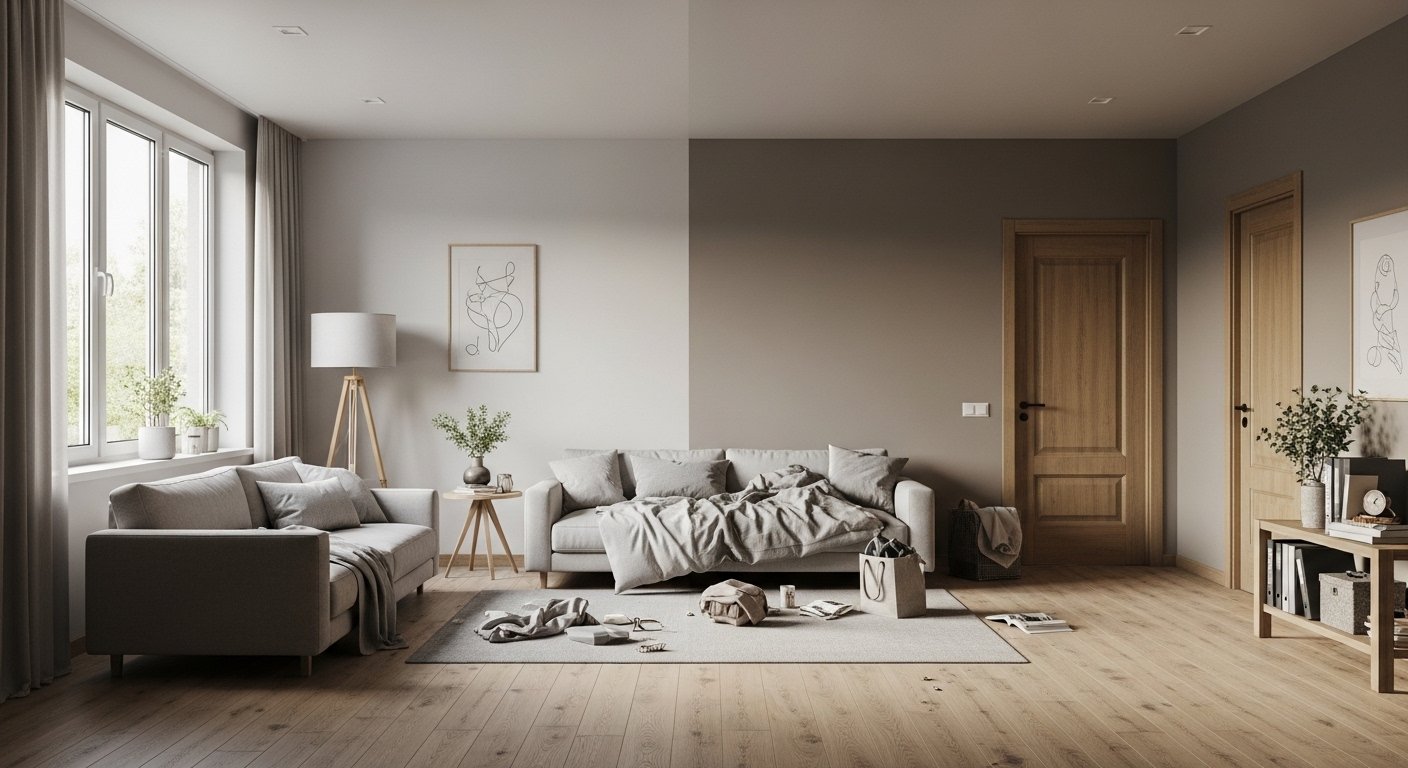
Many homes look tidy, but they’re actually disorganized. The difference
between tidying and organizing isn’t just linguistic—it’s psychological
and functional.
Tidying vs. Organizing
Tidying: Placing things aesthetically
Organizing: Building a system for daily use
Tidying may be temporary; organizing is sustainable.
Why Do We Confuse Them?
Because tidying is:
•Faster
•Easier
•Gives instant results
But a Journal of Organizational Behavior study found that tidied
environments without clear systems lose effectiveness within days.
Signs of a Tidy but Unorganized Home
•Repeatedly searching for items
•Constant re-tidying
•Feeling the house “never ends”
This type drains energy because it requires constant intervention.
Organization and Its Psychological Impact
Good organization:
•Reduces daily decisions
•Improves sense of control
•Supports mental stability
A University of Chicago study found people in organized homes make
18% better financial decisions.
How to Move from Tidying to Organizing?
1.Define each area’s function
2.Reduce item numbers
3.Create fixed systems
Organization doesn’t mean minimalism—it means clarity.
The Psychological Conclusion
An organized home doesn’t draw attention, but works quietly in the
background to support you. A merely tidy home is beautiful… but
exhausting.