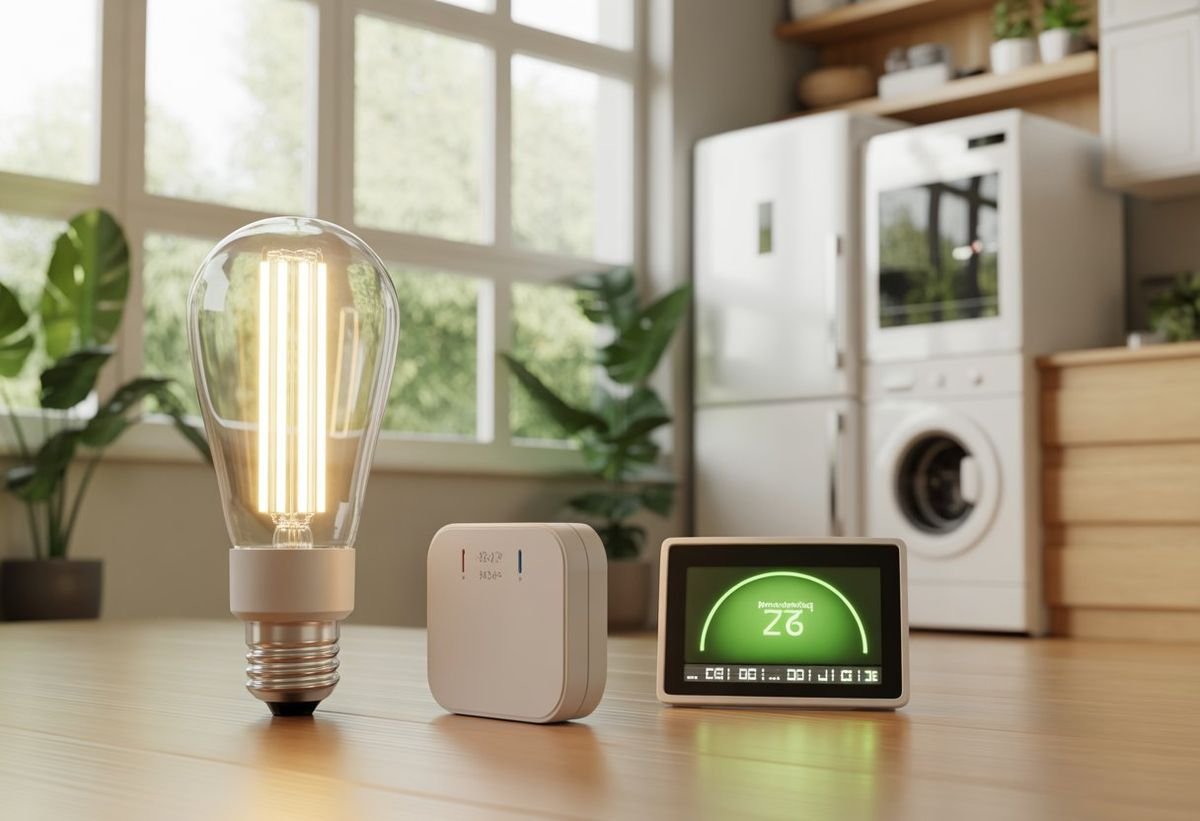
When Light Becomes the Language You Speak with Your Home
Smart lighting isn’t just a technological evolution in illumination tools—it’s a radical
shift in how humans interact with the spaces they live in. For decades, light was a
static element: a switch turned on or off, with one intensity and one function. But
modern research in neuroscience, residential design, and environmental psychology
has proven light affects us far more deeply than we thought, birthing the smart
lighting concept as a solution that goes beyond form to real impact on daily life.
The human brain is biologically programmed to respond to light as a time cue.
Natural light regulates the circadian rhythm, the body’s daily clock. When the sun
rises, activity and alertness levels rise; when light fades, the body prepares for rest.
The problem is modern lifestyles disrupt this balance—we work nights, live under
constant artificial light, and gradually disconnect from natural rhythms.
This is where smart lighting steps in, not as a luxury, but as a tool for rebalancing. It
allows changing color temperature and brightness throughout the day to mimic
natural light as closely as possible. Studies show this reduces sleep disorders,
improves mood, and boosts focus, especially in homes where people spend
extended time.
But smart lighting extends beyond health to visual perception of space. Light reveals
shapes, defines boundaries, and creates depth. Traditional lighting often flattens
spaces, while smart lighting crafts visual layers. Indirect light, for example, softens
harsh shadows and makes walls appear farther away, creating a sense of
expansiveness even in small areas.
Spatial perception research shows humans feel comfortable in environments with
deliberate light variety, not uniform illumination. Smart lighting enables this easily:
general light for transitions, directed light for focus, dimmed light for relaxation. This
light gradient lets the brain shift smoothly between mental states without strain.
Behaviorally, smart lighting reduces “daily friction.” Instead of constantly adjusting
light for activities, pre-program scenarios: morning, evening, work, or relaxation.
Decision-making studies indicate cutting small daily decisions improves overall
comfort and reduces unnoticed stress.
Aesthetically, smart lighting transforms your relationship with decor. Artwork looks
ordinary under wrong light but becomes a focal point under directed beams. Colors
shift by light type, so smart lighting lets you redefine spaces without changing
physical elements.
Practically, smart lighting means simplicity, not complexity. Modern systems are
intuitive: phone or voice control, schedules, motion or natural light response—all
designed so light adapts to you, not vice versa.
Recent studies note users with thoughtful smart lighting adoption show better sleep
quality, higher home satisfaction, and greater space control. This confirms smart
lighting isn’t a trendy fad, but logical evolution in our understanding of home comfort.
Ultimately, smart lighting is about people, not bulbs. It’s an effort to make homes
sensitive entities responding to your rhythm, mood, and daily needs. When used this
way, light transforms from silent element to active partner in your quality of life.