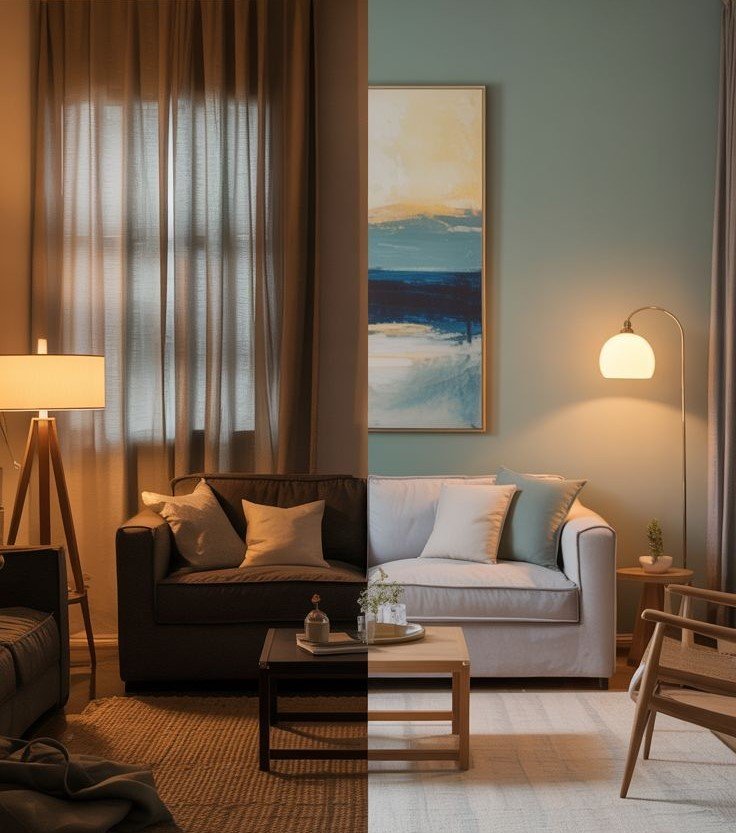
? How Lighting Changes Our Perception of Space, Time, and Emotions
Lighting isn’t a supplementary element in interior design—it’s one of the most
impactful factors affecting living experience within the home. Environmental
neuroscience studies indicate light directly influences the human biological clock and
hormone secretion related to mood, activity, and sleep.
Humans evolved in environments relying on sunlight as primary source, so the brain
still links lighting type to time perception. Strong white lighting stimulates activity and
focus, while dim warm lighting sends signals to the nervous system for relaxation
and rest preparation.
What lighting creates in the home goes beyond clear vision. Light determines how
we see colors, assess space size, and feel within it. Research shows the same room
may feel comfortable or confining based on light distribution, even without changing
other elements.
Indirect lighting, for example, reduces harsh contrast and creates soft shadows
helping the eye relax. This lighting type is widely used in hotels and homes designed
for psychological comfort because it reduces long-term visual stress.
Lighting source distribution within the room also affects depth perception. Layered
lighting combining general, task, and decorative sources helps the brain read space
balancedly. Studies indicate relying on single light source makes spaces appear flat
and visually stressful.
Even lighting in neglected corners has psychological impact. Dark areas may be
unconsciously interpreted as unsafe or incomplete spaces. Treating these corners
with subtle lighting enhances completion and harmony feelings throughout the
home.
Successful lighting goes unnoticed but is felt. When used consciously, it transforms
from illumination tool to element elevating quality of life within the home day after
day.