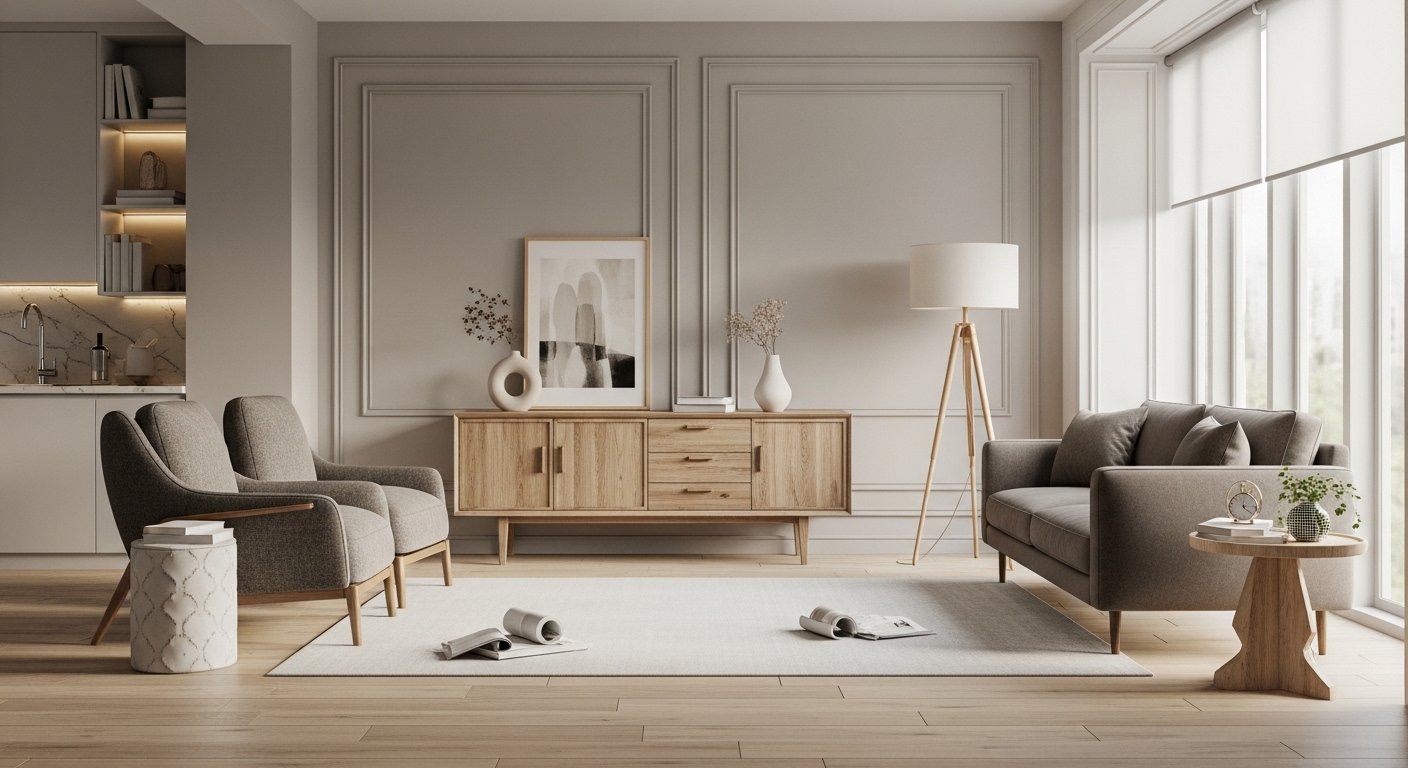
In the early stages of furnishing any home, the space feels like a
comfortable extension of its occupant. Every piece is chosen with
enthusiasm, every corner filled with intent to improve. But over time, an
unnoticed shift occurs: the space that once brought comfort starts
draining your psychological energy without clear reason. This
transformation doesn’t happen suddenly—it accumulates gradually until
the home becomes a burden rather than a supporter.
The Concept of “Supportive Space” in Environmental Psychology
Environmental psychology defines a supportive space as an environment
that helps individuals perform daily tasks with minimal mental effort.
According to Supportive Environments Theory, a good environment:
•Reduces overstimulation
•Facilitates movement and decision-making
•Supports a sense of control
When a space loses these qualities, the brain begins treating it as a
constant stress source.
Early Signs of a Space Turning into a Burden
The shift isn’t always tied to obvious clutter. Sometimes the space is
“tidy” but:
•Filled with visual distractions
•Lacks clear function
•Requires ongoing mental effort to navigate
A study in Cognitive Science Journal showed that environments with
many unused elements raise cognitive load, even if superficially
organized.
Silent Accumulation
One of the most dangerous causes of this shift is silent accumulation:
•Unused gifts
•Beautiful pieces without function
•Oversized furniture
•Items “we might need later”
Each seems harmless alone, but together they turn the space into one
demanding constant mental energy.
When Does Psychological Detachment Occur?
Cognitive behavioral therapy studies indicate people feel unease when
they lose the sense that the space serves them.
Signs include:
•Desire to leave home without reason
•Postponing organization despite available time
•Feeling exhausted upon entry
Here, the home shifts from a restorative space to a draining one.
How to Restore the Space’s Supportive Role?
The reversal starts with:
•Redefining each area’s function
•Reducing daily decisions within the home
•Removing unused items
A Stanford University study found that cutting visual distractions by 30%
noticeably improves focus and overall mood within one week.
For more on space organization, read our blog articles on organizing
your home regardless of its size.