
How to Design the Home’s Most Used Space Mindfully?
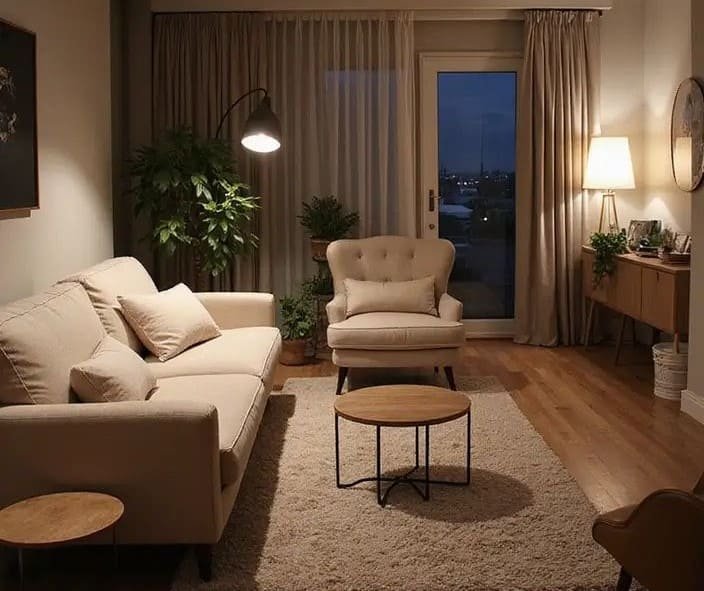
The living room is the home’s true heart. It’s where family gathers, guests get welcomed,
and daily rest moments happen. Thus, its design shouldn’t build on form alone, but deep
understanding of actual usage patterns.
Home behavioral studies indicate living rooms directly impact social interaction quality
inside the house. Spaces enabling eye contact and natural movement encourage
conversation and reduce isolation feelings.
The first essential element in comfortable living rooms is furniture distribution. Architectural
research shows arranging furniture around focal point—like table, window, or light
source—creates containment and harmony sensations. Random arrangement, conversely,
creates unjustified tension.
Comfortable seating doesn’t mean large sofas alone. Physical comfort studies indicate
seating variety meets different needs, from relaxation to formal sitting. This diversity boosts
room usage across multiple scenarios.
Living room lighting must be flexible. Strong light suits activities, while warm light fits
relaxation. Lighting science research confirms controlling light intensity increases
psychological comfort feelings and reduces stress.
Colors play pivotal role here. Living rooms often benefit from medium tones neither feeling
cold nor crowded. Color psychology explains these help emotional balance, especially in
shared spaces.
Soft elements like rugs, cushions, and curtains aren’t just aesthetic additions. Acoustic
studies show they reduce noise and improve room sound quality, making gatherings more
comfortable.
Personal touch proves indispensable. Photos, books, or meaningful pieces make the room
warmer. Research indicates spaces reflecting residents’ identity enhance belonging and
stability feelings.
Finally, comfortable living rooms evolve over time. Successful design allows change without
losing balance. Flexible design theories confirm living spaces are those capable of
adaptation.
Ultimately, your path to comfortable living room doesn’t start with new purchases, but
understanding daily needs. When design builds on this understanding, the living room
transforms into space resembling you.
